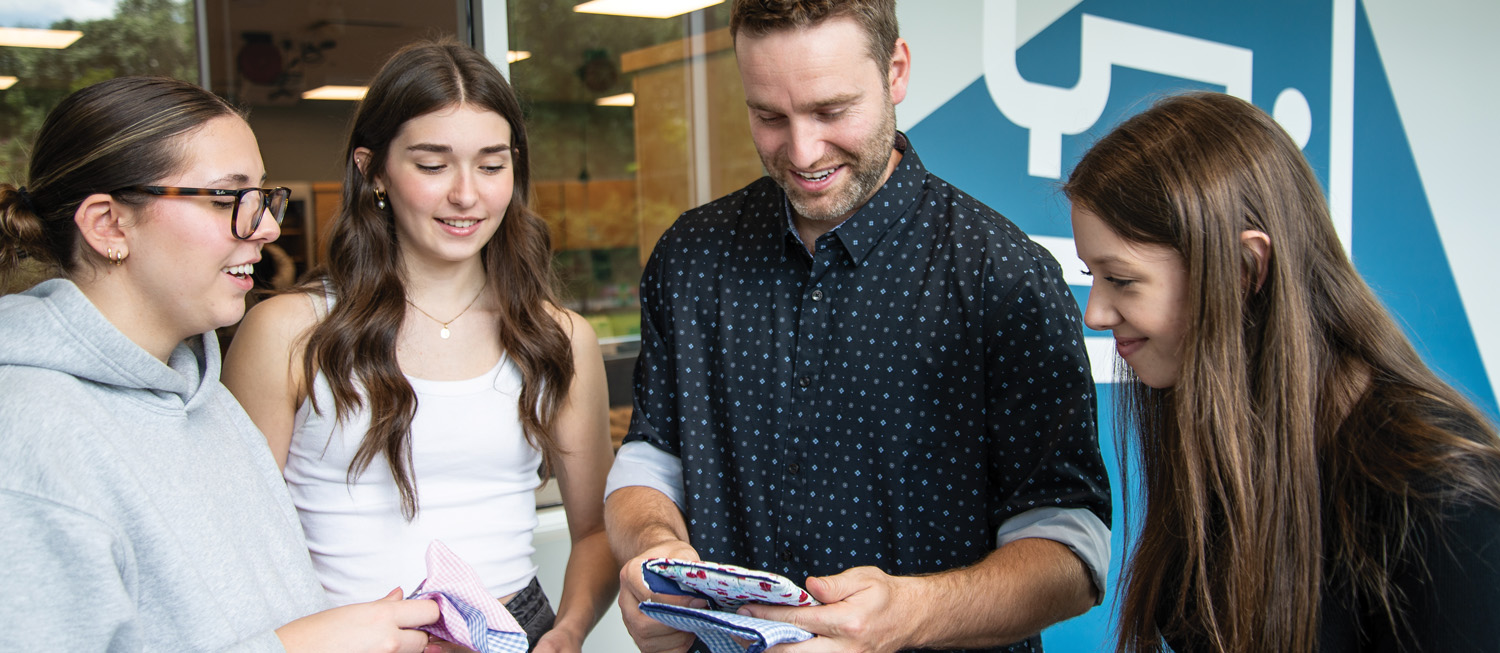
Teaching entrepreneurship isn’t exactly in secondary teacher Todd Bakker’s comfort zone. After all, he teaches courses with predetermined curriculum and objective answers such as chemistry and grade 9 science. “I’m not an entrepreneur beyond having a lawn mowing business as a kid,” says Todd.
However, he was up for the challenge and sought to learn more about what makes this class valuable. “Entrepreneurship is unique because most classes are more content laden, like chemistry,” he explains. “Entrepreneurship curriculum, on the other hand, expects students to engage in entrepreneurial activities.”
Not Your Usual Bake Sale
When asked how he planned the course, being that it was so different from what he usually teaches, Todd replied, “I thought that students see a lot of people who live this…. At the end of the day, in a good entrepreneurship course, they should have the chance to be an entrepreneur, but it should be safe enough that they can afford to fail.” As part of the planning process, he contacted a number of business owners and applied for a significant grant from ACS’ Deeper Learning Fund.
His students started out learning business basics with a book study about different entrepreneurs’ journeys. Then the class met with local entrepreneurs, hearing their inspiring stories as well as their advice for young entrepreneurs.
The final part of the course was where it got more intense. Todd encouraged the students to find something they were truly passionate about and wanted to work on daily.
They paired up, made a business plan, and pitched their idea to a panel of teachers, similar to Dragon’s Den. The panel determined how much funding each group received based on their pitch. Thinking that presenting their ideas would be the easy part, most of the students walked into their pitch meeting ready to get going with a business, but walked out with many questions they hadn’t thought about. Questions like, “Is our product available anywhere else for cheaper?” and “Can we compete with businesses making this on an assembly line?”
“It’s a bit of a hit right off the bat,” Todd says, but it’s those roadblocks that lead entrepreneurs to success. After all, this isn’t your usual school bake sale. Students are marketing their businesses to people in the real world, where many products are cheaper from big corporations. Once students fully understand this, the project becomes quite daunting. “They have to develop resilience,” says Todd, “because otherwise they don’t ever take that first step.”
Facing Roadblocks
After the students had modified their plans and felt ready to start their business, they faced roadblock, after roadblock, after roadblock. London Krahn and Zoe Grandia launched a business selling homemade make-up bags.
Their first roadblock? They didn’t know how to sew.
They had to learn a completely new skill, which made selling quality items quite difficult.
“Selling them was hard at first, because the bags were not that good,” says London with a smile. However, as time went on, London and Zoe kept practicing and their products greatly improved. “It gave me a really good idea of what building a business will be like,” reflects London.
Risks…Naturally
“The weird thing about entrepreneurship,” says Todd, “is that so many entrepreneurs never went to school for it.” Students were inspired by Hieke Morton, director of The Gathering Markit, who went through the same process of learning things on her own, while starting a non-profit grocery store.
The students faced uncertainty through the journey. After receiving their funding, they bought their materials upfront, not knowing if their product would even sell.
The risk was no different than any start-up business. “It’s all these things they run into that are pretty natural for a business to run into,” says Todd about the challenges his students faced, “but they run into them in a safe space.”



WHAT DO YOU THINK?